1999-2000
Valasa
Director / Writer
Built around Indian students in the U.S.; later shortened into a reported unreleased 2003 film.
An Indian-American filmmaker whose Telugu work turns politics into lived moral conflict.
From Prasthanam to Mayasabha, his stories ask how caste, dignity, and institutions reshape ordinary lives.
1999-2025
Documented screen journey
10
Major credited works
IFFI 2010
Indian Panorama recognition
Hero image
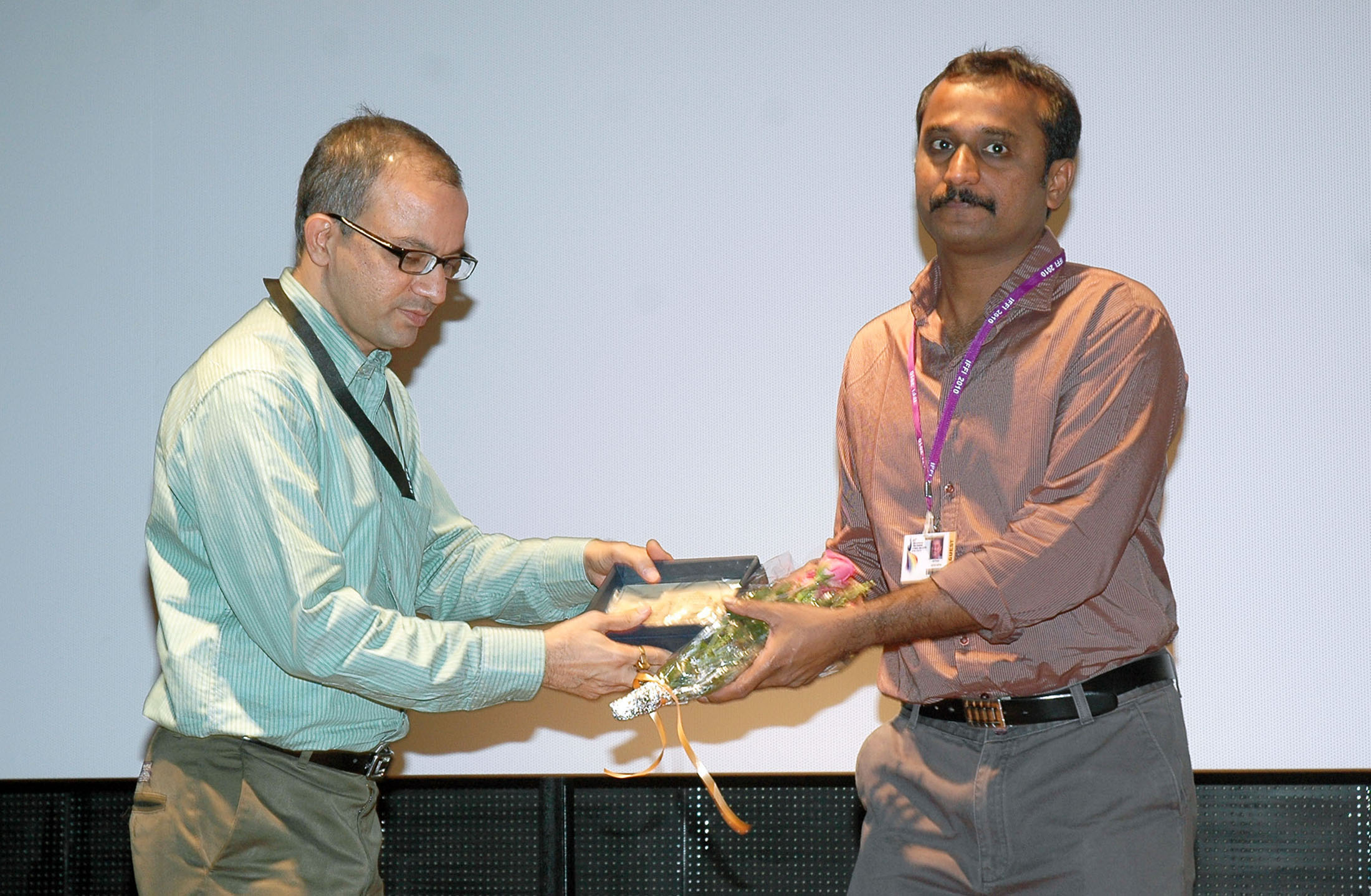
Felicitation moment during the Prasthanam presentation at IFFI 2010, Panaji, Goa.
Recognition
IFFI 2010
Indian Panorama visibility around Prasthanam.
Approach
Emotional truth
Power, systems, and moral ambiguity.
Built around the strongest research anchors: engineering training, diaspora experience, and breakthrough festival recognition.
Deva Katta is an Indian-American director and screenwriter working mainly in Telugu cinema. This build omits a birth year because the research record does not confirm one consistently.
Born in Eluru, shaped by Chennai, educated in Detroit, and employed at General Motors before cinema, he brings systems-thinking to stories about family, caste, bureaucracy, and power.
Origin
Born in Eluru, with roots in the Kadapa-Tirupati region.
May 24 appears consistently in public profiles; the birth year does not.
Engineering
M.S. in mechanical engineering from Wayne State University.
Worked in Detroit as a crashworthiness expert at General Motors.
Breakthrough
Prasthanam pushed him into critical and festival recognition.
Indian Panorama at IFFI and a cluster of major awards followed.
Timeline
Move to Chennai
A reported move that shapes his early cultural context.
Valasa
Early directing and writing work around Indian students in the U.S.
Vennela
Feature debut released on 26 November 2005.
Prasthanam
Political-family drama that brought critical recognition and IFFI selection.
Republic
A sharper institutional critique through an IAS officer confronting corruption.
Mayasabha: Rise of the Titans
Long-form political saga for SonyLIV, premiering on 7 August 2025.
Influence map
Structured from the dossier rather than a bare film list, so each credit keeps its context.
1999-2000
Director / Writer
Built around Indian students in the U.S.; later shortened into a reported unreleased 2003 film.
2005
Director / Writer
Released 26 November 2005 as a diaspora-centered romantic comedy.
2010
Director / Writer
Political-family drama selected for Indian Panorama at IFFI.
2013
Actor
Listed acting credit, including an A.C.P. role.
2014
Director / Writer
Released 27 June 2014 after a long delay cycle.
2015
Credited director
Usually presented cautiously because he has said he exited early over creative differences.
2015
Director / Writer
English-language short on women’s economic independence.
2019
Director
Hindi remake of his Telugu breakthrough.
2021
Director / Writer
Released 1 October 2021 and widely framed as a hard-hitting political drama.
2025
Co-director / Co-writer / Creator
Premiered 7 August 2025 on SonyLIV as an inspired-by political retelling.
Public box-office figures are inconsistent across sources, so this version privileges release dates, role clarity, and critical context over unreliable totals.
Shown as film-linked public recognition, not just a list of personal trophies.
Recognition note
The report explicitly treats performer and producer awards as part of the public reputation of a film. For a director profile, that is more honest than pretending only direct personal wins matter.
Publishing caution
Filmfare category wording should be cross-checked once more before public launch because year-by-year naming conventions can shift.
2010
Third Best Feature Film (Bronze)
Prasthanam
Producer recognition tied to the film.
2010
Best Supporting Actor
Prasthanam
Awarded to Sai Kumar for the film.
2010
Critics Award for Best Telugu Film
Prasthanam
Category wording should be reconfirmed before publication.
2010
Best Supporting Actor (Telugu)
Prasthanam
Recognition tied to Sai Kumar’s performance.
2011
Best Supporting Actor
Prasthanam
Recognizes Sai Kumar and the film’s awards run.
2011
Critics Choice Film
Prasthanam
Useful public recognition marker, though sourced more secondarily.
2015
Best Actor in a Negative Role (Telugu)
Autonagar Surya
Reported nomination linked to a supporting performance in the film.
Emotional truth, institutional imbalance, and characters shaped by the pressure around them.
Characters are written inside socio-economic conditions rather than in isolation.
Power is treated as a lived system that distorts private morality and public institutions.
Gray morality matters more than slogan-driven heroism.
Caste and political awakening are depicted without flattening everyone into villains or saints.
Long-form storytelling is approached with the flow of one extended movie rather than disconnected episodes.
Inspired-by history is framed as a route to emotional truth, not as a biopic contract.
“It’s about the definition of democracy... the checks and balances... none of that exists if one wing holds too much power.”
Deva Katta on institutional balance
“Even to tell the truth, we have to lie.”
Deva Katta on inspired political history

Praise and criticism are kept together instead of flattening everything into marketing.
“We are glad that the doors of critical acclaim have now been opened...”
Festival-related coverage quoting Deva Katta
“Deva Katta’s Republic will go down as one of the most important Telugu films in recent years.”
Hindustan Times review of Republic
“The heavily dramatised staging... play to the gallery.”
Scroll review of Mayasabha
Only clearly licensed GODL-India photography from the dossier is used here.
Felicitation moment during the Prasthanam presentation at IFFI 2010, Panaji, Goa.
Size: 2200 × 1438
Ministry of Information & Broadcasting / Press Information Bureau, Government of India (GODL-India).
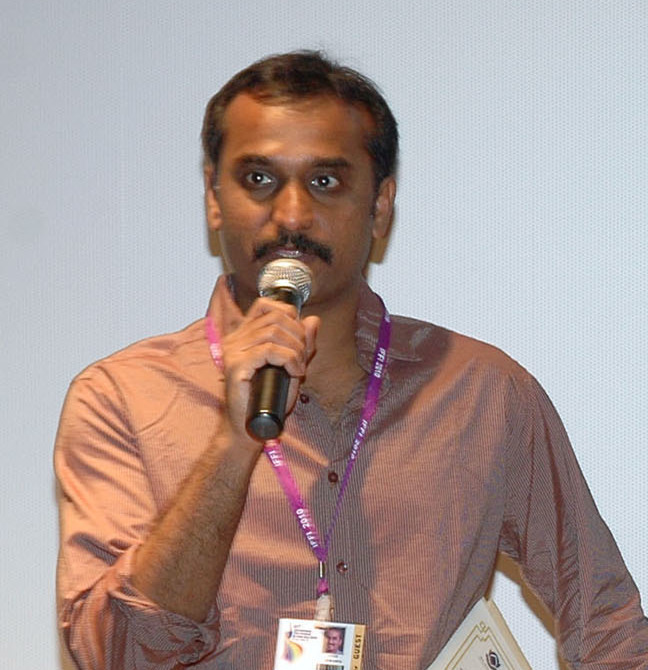
Speaking during the presentation of Prasthanam at IFFI 2010.
Size: 648 × 670
Ministry of Information & Broadcasting / Press Information Bureau, Government of India (GODL-India).
Addressing the audience at the Prasthanam presentation in Panaji, Goa.
Size: 2200 × 1338
Ministry of Information & Broadcasting / Press Information Bureau, Government of India (GODL-India).
Contact
Publicly listed social handles are included below. If this goes live as an official site, add a managed contact form rather than publishing an unverified email address.
Best suited for
Editorial note
Birth year remains intentionally unpublished in this build because the research report flags it as insufficiently corroborated in reliable sources.